
Share this page
Leg Pain & Sciatica
Slipped Disc (Lumbar Disc Prolapse)
A 'slipped disc' does not actually slip — it bulges or herniates. Most settle within weeks with movement and pain relief; only a small minority need surgery.

For information only — not medical advice. The content on this page is patient education to help you understand a condition or treatment. It is not a substitute for personalised assessment by a qualified clinician. Always consult your doctor or specialist about your own symptoms, diagnosis, and treatment decisions.
When to seek urgent care
Red-flag symptoms

If you develop any of the following, seek urgent medical attention — call 111 or attend your nearest emergency department.

Overview
A 'slipped disc' is one of the most talked-about back problems, and one of the most misunderstood — starting with the name itself, because a disc does not actually slip. For most people who develop one, the news is far more reassuring than the dramatic name suggests: the great majority settle within a few weeks, and only a small minority ever need surgery.
This page explains what a slipped disc really is, why it happens, the symptoms it causes, how it is diagnosed, how long it tends to last, and the full range of ways it can be managed. It is written for patients and families who want to understand the condition properly before, or instead of, reaching for the worst-case scenario online.
Please read first
A note before we begin
Everything here is general information, not personal medical advice. Every back is different, and a curve or a disc problem must be assessed by your own clinician. There is also one set of symptoms — covered below under cauda equina syndrome — that is a medical emergency and should never be left, so please read that section carefully.
At a glance
A 'slipped disc' means one of the cushioning discs in the spine has either bulged or had part of its softer centre push out (a prolapse or herniation). The disc does not actually slip out of place.
It can cause back pain, leg pain (sciatica), pins and needles, numbness or weakness — depending on whether and where it presses on a nerve.
The pain is often eased by lying still and made worse by moving, coughing or sneezing. Sitting is frequently the most uncomfortable position.
Most slipped discs improve within a few weeks by staying active and using pain relief. Around nine in ten people recover within about six weeks.
The size of the disc problem on a scan does not reliably predict how much pain someone has — small prolapses can hurt a lot, and large ones are often found in people with no symptoms at all.
Seek emergency help if you develop loss of bladder or bowel control, numbness around the genitals or back passage, or worsening weakness in the legs.
What is a slipped disc?
'Slipped disc' is an old term, and not a very accurate one, because nothing slips. It is now more usual to talk about a disc prolapse, a disc herniation or a disc bulge. We will keep using 'slipped disc' on this page simply because it is the phrase most people search for and recognise, but it helps to understand what is actually happening.
There are two related processes that get grouped under the heading of a slipped disc. In the first, part of the soft, jelly-like centre of a disc — called the nucleus pulposus — pushes out through a weakness in the tougher outer ring of the disc. This is a prolapse or herniation, and these are the more accurate terms. In the second, the outer layer of the disc bulges outward because the disc has become less flexible over time, without the centre breaking through. This is a disc bulge.
In either case, the part of the disc that pushes out can press on nearby structures, most importantly a nerve root branching off the spinal cord. Pressure is only part of the story, though. Inflammation also develops around the prolapsed part of the disc, and that inflammation can irritate a nearby nerve and cause swelling that adds to the pressure. This is why two people with similar-looking scans can have very different amounts of pain.
Any disc in the spine can prolapse, but the lower back is overwhelmingly the most common site: around 95 out of every 100 prolapsed discs occur in the lumbar spine. As a general rule, the larger the prolapse, the more severe the symptoms tend to be — but, as we will see, that rule is far from absolute.
One of the most important facts about slipped discs is also one of the least known: a prolapsed disc or a disc bulge is commonly found on MRI scans in people who have no symptoms whatsoever. The presence of a disc problem on a scan does not, by itself, mean it is the cause of someone's pain.
This page is about a slipped disc in the lower back. Disc problems in the neck behave somewhat differently and are covered separately under cervical spine conditions.
Understanding your spine and discs
To make sense of a slipped disc, it helps to picture the normal structure first. The spine is a column of bones called vertebrae, each roughly the shape of a flattened cylinder, stacked one on top of another. Between most of them sits a disc, made of strong, rubbery material that lets the spine bend and twist and acts as a shock absorber.
Every disc has the same basic design: a tough, fibrous outer ring, and a softer, jelly-like centre, the nucleus pulposus. Running down through the middle of the spinal column is the spinal cord, carrying the nerves that travel between the brain and the body. At each level, nerves branch off the cord and pass out through gaps between the vertebrae to reach the limbs and organs. Strong ligaments and layers of muscle bind and support the whole structure.
A slipped disc is, in essence, a disruption of this neat arrangement at one level: the disc's outer ring weakens or tears, its soft centre pushes toward the space where the nerves run, and the nearby nerve root can become pressed upon or inflamed.
What does a slipped disc feel like? The symptoms
Before listing the symptoms, one point deserves emphasis because it surprises almost everyone: the size of a slipped disc does not reliably match the severity of symptoms. People with tiny bulges can be in severe pain, while people with large prolapses can have very little, and slipped discs are routinely seen on the scans of people with no back or leg symptoms at all. Symptoms depend much more on whether the disc is pressing on or irritating a nerve than on its size.
With that in mind, the typical symptoms fall into a few groups.
Back pain. The pain is often severe and frequently comes on suddenly. It is usually eased by lying still, and made worse by moving the back, coughing or sneezing. Many people find sitting the most uncomfortable position of all, because sitting places the most pressure on the lower discs and nerves, while standing and walking are often more bearable.
Leg pain, or sciatica. When the prolapsed disc presses on or inflames a nerve root, pain can be felt not just in the back but anywhere along the path of that nerve — sometimes all the way down to the foot. This is nerve root pain, and when it involves the sciatic nerve, the large nerve that runs deep through the buttock and down the back of the leg, it is called sciatica. Nerve root pain is often described as burning, shooting or electric, and it is frequently worse than the back pain itself. (Sciatica is a substantial topic in its own right, and is covered in detail on our separate sciatica page.)
Pins and needles, numbness and weakness. Irritation of or pressure on a nerve can also produce a tingling 'pins and needles' sensation, areas of numbness, or weakness in part of the buttock, leg or foot. The exact location depends on which nerve is affected — for example, some nerve levels affect the top of the foot, others the outer edge of the foot, and higher levels can affect the strength of the thigh.
No symptoms at all. Finally, it is worth repeating that some people have a prolapsed disc and feel nothing. Symptoms mainly arise when the prolapse presses on or irritates a nerve, and that does not happen in every case.

Cauda equina syndrome: the emergency to know about
There is one rare but serious complication of a slipped disc that everyone with back and leg symptoms should know about, because catching it early matters enormously.
Cauda equina syndrome occurs when a large disc prolapse presses on the bundle of nerves at the very bottom of the spinal cord. These nerves control the bladder, the bowel and sensation around the groin, so when they are compressed the warning signs are distinctive. They include difficulty passing urine or a loss of bladder or bowel control (which may be an inability to go, or leakage), numbness in the 'saddle' area around the genitals and back passage, and weakness, numbness or pain affecting one or both legs.
Cauda equina syndrome is a medical emergency. The nerves to the bladder and bowel can be permanently damaged if the pressure is not relieved quickly, so these symptoms must never be left to see if they settle. If you develop any of them, go to your nearest emergency department straight away, or call the emergency services. It is always better to be checked and reassured than to wait.
How common is a slipped disc?
A slipped disc is a well-known cause of back pain, but not the usual one. Only about 1 in 20 cases of back pain is caused by a prolapsed disc; the large majority of back pain comes from the muscles and other soft tissues rather than the discs.
The most common age to develop a slipped disc is between 30 and 50 years, and it affects roughly twice as many men as women. Disc problems are uncommon in people under 20. Disc bulges, where the centre has not broken through, are less likely to cause pain than true prolapses.
What causes a slipped disc?
The background to most slipped discs is a gradual, normal process called disc degeneration. As we get older, the discs become less flexible and lose some of their water content, which makes them drier, stiffer and more prone both to small tears and to bulging out of their normal position. This is part of ordinary ageing rather than a disease.
Against that background, something often acts as a trigger. A sneeze, an awkward bend, or lifting a heavy object in an awkward, twisted position can place extra pressure on a disc, and where there is already a weakness, that can be enough to push the soft centre through the outer ring.
Several factors are linked to a higher chance of developing a slipped disc. These include a job or activity involving a lot of heavy lifting; a job involving a lot of sitting, especially prolonged driving; very strenuous physical activity or exercise; smoking; carrying excess weight; increasing age, as the discs naturally weaken; and a genetic tendency, since some people inherit a predisposition to earlier wear and tear of the discs. Having one or more of these does not mean a slipped disc is inevitable, and many people with none of them still develop one.
How is a slipped disc diagnosed?
A slipped disc can produce back and leg symptoms that overlap with those of more ordinary, muscular back pain, so the assessment begins with a careful history and examination. A specialist will ask about the pattern of pain — where it is, what eases and worsens it, and whether it travels down the leg — and will examine the back and legs, testing sensation, strength and reflexes. A common test is the straight-leg raise, in which lifting the straightened leg while you lie down reproduces leg pain at a low angle when a nerve root is irritated.
In most cases, no tests are needed at all, because the symptoms settle within a few weeks. When imaging is required, the choice of test matters. Ordinary X-rays are of limited use for a slipped disc, because although they show the bones, they cannot show the discs between them. An MRI scan is the test of choice: it shows the discs, nerves and soft tissues clearly, and can pinpoint the exact level and size of a prolapse.
There is, however, a crucial caveat that runs through the whole subject. Because disc prolapses are so often present in people without symptoms, a prolapse seen on a scan must be carefully matched against the actual symptoms before it is blamed for the pain. Lower back pain is extremely common, and it is entirely possible for someone to have both an incidental disc prolapse on MRI and back pain that is coming from something else entirely. This is one of the main reasons a scan is interpreted alongside a clinical assessment, rather than on its own.
Will a slipped disc get better on its own?
For the great majority of people, the answer is yes. The natural course of a slipped disc is genuinely favourable, and most improve steadily without any need for surgery.
A particularly encouraging fact is that prolapsed discs often shrink over time on their own, through a natural process in which the body gradually reabsorbs the displaced material. Interestingly, larger prolapses are sometimes more likely to regress than smaller ones, and people often feel substantially better well before any change is visible on a scan.
How long does a slipped disc take to heal?
In most cases, symptoms ease over a few weeks. To put rough numbers on it, about half of people improve within around 10 days, about three-quarters within four weeks, and around nine in ten have recovered by about six weeks. Only a small minority — in the region of 2 in 100 people with a prolapsed disc — still have pain bad enough after about 12 weeks that surgery is considered.
These figures are averages, and individual recovery varies, but the overall message is clear: time, movement and sensible pain management resolve most slipped discs.
How is a slipped disc treated?
Treatment usually follows a stepped approach, starting with the simplest, least invasive measures, which is all that most people ever need. The aim in the early weeks is to control the pain enough to keep moving while the disc settles. The details of any treatment, including any medication, are matters for your own doctor; what follows is a general overview rather than a recommendation for any individual.
Staying active
The single most important principle is to stay as active as you reasonably can. This may not be possible in the first day or two if the pain is severe, but getting moving and back to normal activities as soon as you are able genuinely speeds recovery. The old advice of prolonged bed rest has been firmly overturned: people who keep gently active recover more quickly and are less likely to go on to long-term back pain. As a sensible rule, avoid the specific things that cause a lot of pain, but do not simply stop and wait. Because sitting tends to be the most uncomfortable position, many people find it easier to stand and walk, and to lie down to rest rather than sitting upright for long periods.
Exercise and physiotherapy
General exercise is valuable, helping to build the strength of the muscles that support the spine and easing pain over time. It is not clearly established that any one set of specialised back exercises is better than simply keeping generally fit, but a physiotherapist can tailor advice to the individual, help those who have become fearful of moving, and guide a safe return to activity.
Physical treatments
Some people seek manipulation or other hands-on treatments from a physiotherapist, chiropractor or osteopath. These may offer some short-term comfort for certain people, though the evidence is mixed, and they are best combined with regular exercise rather than relied on alone. Manipulation is generally not recommended where there is acute nerve-root pain, which is one reason a proper assessment first is sensible.
Medication
Pain relief, where it is needed, generally works best taken regularly rather than only when the pain peaks, because steady relief makes it easier to stay active and recover. Doctors draw on several categories of medication depending on the individual: anti-inflammatory painkillers, simple analgesics, medicines designed specifically for nerve pain, and, for short periods only, stronger painkillers. Not everyone can take every type — anti-inflammatories, for instance, are not suitable for some people with particular health conditions — which is exactly why these decisions are made with a doctor or pharmacist rather than alone. Some medications are not recommended for this kind of pain at all. The key point for this page is simply that effective options exist and should be discussed with, and guided by, your own clinician.
Epidural injections
For pain that is not settling with the above, a specialist may suggest an epidural injection into the area where the affected nerve leaves the spine. This delivers a combination of local anaesthetic and a steroid, a powerful anti-inflammatory, directly to the irritated area. It acts as a longer-lasting form of pain relief, and its value is often in providing enough comfort to allow someone to start or continue exercising and rehabilitating.
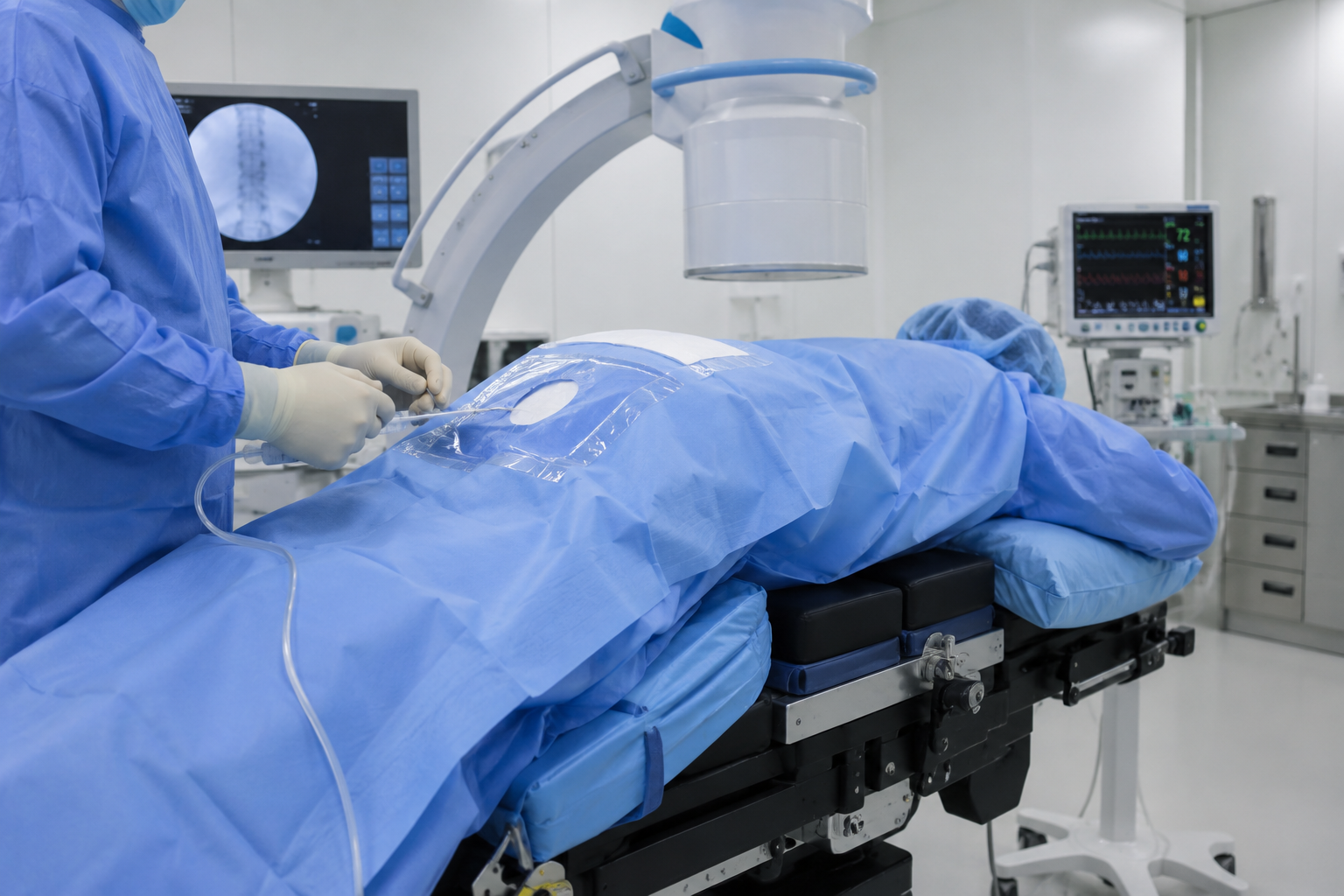
Surgery
Surgery is considered only for the minority of people whose symptoms are severe and have not settled after at least around six weeks, or sooner if there are serious warning signs such as those of cauda equina syndrome. This is a small group, because in roughly nine out of ten people the symptoms have eased substantially, or are no longer bad enough to warrant an operation, by that point.
The aim of surgery is to remove the prolapsed part of the disc and relieve the pressure on the affected nerve. The standard operation for a herniated disc pressing on a nerve is a microdiscectomy, in which the fragment of disc compressing the nerve is removed through a small incision. Surgery often eases symptoms well, particularly leg pain, but it does not help in every case, which is why the potential benefits and risks are weighed carefully for each person.
Surgery tends to be more successful in people who had very severe back and leg pain before the operation, a shorter time between the start of symptoms and surgery, younger age, better mental wellbeing, and better levels of physical activity beforehand. It is also worth knowing what the larger studies show about the longer term: surgery and non-surgical treatment (pain relief and exercise) tend to reach similar results in the long run, but surgery can get there faster, providing quicker relief of leg pain in the shorter term. Whether that trade-off is worthwhile is an individual decision, made with a specialist.
Endoscopic (Keyhole) Spine Surgery
Patient guide · Spinal surgery
Endoscopic spine surgery is a minimally invasive way of treating certain spinal problems — most commonly a herniated disc causing sciatica — through a very small incision, rather than the larger opening used in traditional open surgery. This section explains what it is, how it works, and what its potential advantages are, as general information to support the discussion you would have with your surgeon.
What is endoscopic spine surgery? Endoscopic spine surgery is a minimally invasive alternative to traditional open surgery. Instead of making a larger incision and moving the muscles aside, the surgeon uses a thin tube containing a high-definition camera to reach the spine, working through a tiny opening with the operation guided by a magnified video image.
How it works. Under video guidance, specialised instruments are passed down the tube to remove the herniated disc material that is pressing on the nerve, through an incision of only around 18 millimetres. Because the tube is passed between the muscles rather than stripping them away, the surrounding tissue is largely left undisturbed, and the surgeon can reach and decompress the nerve with minimal disruption to the back.
What it can treat. The most common reason for endoscopic spine surgery is a herniated (slipped) disc that is compressing a nerve root and causing leg pain, or sciatica, that has not settled with non-surgical treatment. Whether this approach is suitable for a particular problem depends on the individual case and is decided with your surgeon.
The potential advantages. Compared with traditional open surgery, the keyhole approach offers several potential benefits: a smaller incision — which means less scarring and a better cosmetic result; less tissue trauma — reduced damage to the back muscles, which often means less back pain after the operation; and a faster recovery — many people are able to go home the same day or the next day, and to return to work and normal activities sooner.
Is it right for me? Endoscopic surgery is one option among several, and it is not the right choice for every problem or every patient. As with any spinal operation, it carries the general risks of surgery, and the suitability of a keyhole approach depends on the exact nature, size and location of the disc problem, as well as your individual circumstances. The right approach is always one decided together with your surgeon, who can weigh up the options in light of your scans and your symptoms.
A note before you start. This information is provided for general education and does not replace the advice of your surgical team. Whether surgery of any kind is needed, and which technique is most appropriate, are decisions to make with a specialist who can assess your particular situation.
Can a slipped disc be prevented?
There is no guaranteed way to prevent a slipped disc, but the best evidence points to the same simple measures that protect against back pain in general: keeping active and exercising regularly, with general fitness activities such as walking, running and swimming. No particular back-strengthening routine has been shown to be clearly better than simply staying fit and active. It is also sensible to be 'back-aware' in daily life — for example, avoiding lifting heavy objects while twisted into an awkward position. Stopping smoking and maintaining a healthy weight are reasonable steps too, given their links to disc health.
When should you see a specialist?
Most slipped discs can be managed without specialist input, settling with time, movement and pain relief. It is worth seeking medical assessment, however, if the pain is severe or not improving over several weeks, if leg pain or weakness is getting worse rather than better, or if you are simply unsure what is causing your symptoms and want a clear diagnosis.
And, to repeat the most important point on this page, certain symptoms call for emergency care rather than a routine appointment. Go to your nearest emergency department straight away, or call the emergency services, if you develop any problems with bladder or bowel control, numbness around the genitals or back passage, or worsening weakness in one or both legs.
The key message
A slipped disc sounds alarming, but for most people it is a self-limiting problem that improves within weeks by staying active and managing the pain sensibly. Scans frequently show disc changes that are not the source of someone's pain, surgery is needed only by a small minority, and the long-term outlook is generally good. The one thing never to ignore is the emergency pattern of bladder or bowel problems, saddle numbness, or worsening leg weakness — which needs immediate attention.
Frequently Asked Questions
Sciatica and slipped discs generate a lot of worry and a lot of searching, so this section gathers the questions patients ask most often and answers them clearly. It is general information to help you understand what is going on; it is not a substitute for assessment by your own clinician, who can relate it to your particular symptoms.
When to seek emergency help. Go to your nearest emergency department (A&E) straight away, or call the emergency services, if you develop loss of bladder or bowel control, numbness around the genitals or back passage, or worsening weakness in one or both legs. These can be signs of cauda equina syndrome, which needs urgent treatment to prevent permanent harm.
Understanding sciatica and slipped disc
Living with sciatica
What can be mistaken for sciatica?
Scans: MRI and X-ray
Treatments
Endoscopic (keyhole) surgery
Common questions
References & further reading
- —NICE — Low Back Pain and Sciatica in Over 16s (NG59)
- —NHS — Spinal Conditions
- —British Association of Spine Surgeons (BASS)
This information is for general patient education and is not a substitute for an individual consultation. Always seek personalised advice from a qualified spinal specialist.
Found this helpful? Share it
Discuss this with Mr Madi
Personalised, consultant-led advice
Every patient is different. The information on this page is a starting point — Mr Madi will tailor any plan to your specific imaging, symptoms and goals.